Imgorthand/E+/Getty images
Have questions or need help? Give us a call: 877-307-7668
Call now
Written by Faith Foushee /
Edited by Jamie Cesanek /
Last updated November 14, 2025
Imgorthand/E+/Getty images
Why trust SaveOnEnergy?
Learn MoreAt SaveOnEnergy, we work to offer accurate information with editorial integrity.Our partners do not direct our editorial content, though we may reference their products in our posts. Read more about how we make money.
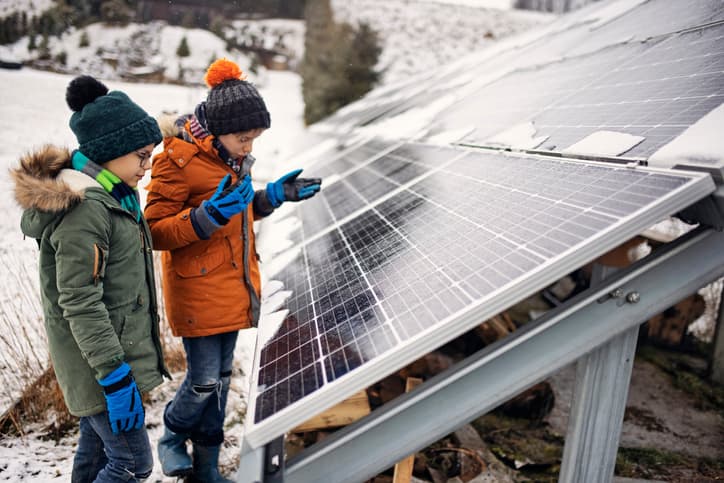
Yes, solar panels still work in cold-weather states. In fact, many cold northeastern states, such as Massachusetts, Vermont, and Maine, rank high for solar power generation.
Cold air actually improves efficiency, but snow and low sunlight can reduce production. They are typically designed to operate within a temperature range of -40 degrees to +185 degrees Fahrenheit. Make sure to check with your solar manufacturer to confirm the temperature range for your panels.
Solar panels may generate less energy in winter than in other seasons due to shorter daylight hours and lower sun angles. The exact reduction will vary depending on location, weather conditions, and panel orientation. However, the general estimate is around 20–30% less production when panels are covered in snow.